
Hours
- Mon-Sat: 10:00am-2:00pm
Tue-Thu: 17:00pm-20:30pm
Contact
-
(+30) 698 798 53 75
Contact Form
Prosthodontics (Bridges – Dentures)
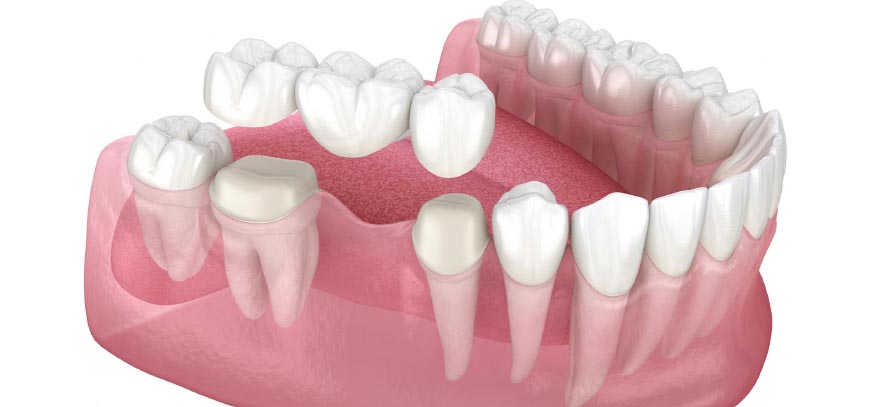
Prosthodontics is the field of dentistry that deals with replacing the natural tooth with artificial materials. Depending on the situation, the medical indications and the wishes of the patient himself, specialists in the field of modern Prosthetic Dentistry can treat:
- the crooked teeth
- the spaces between the teeth
- broken or small teeth
- teeth that require shape modification
Stable recovery
For the restoration of teeth there are several options and a variety of designs that are firmly fixed in the oral cavity, using special dental cement.
The crown is a prosthetic material that covers the entire tooth and fits precisely to its contour. In addition to protecting the tooth, a crown can aesthetically perfect its image.
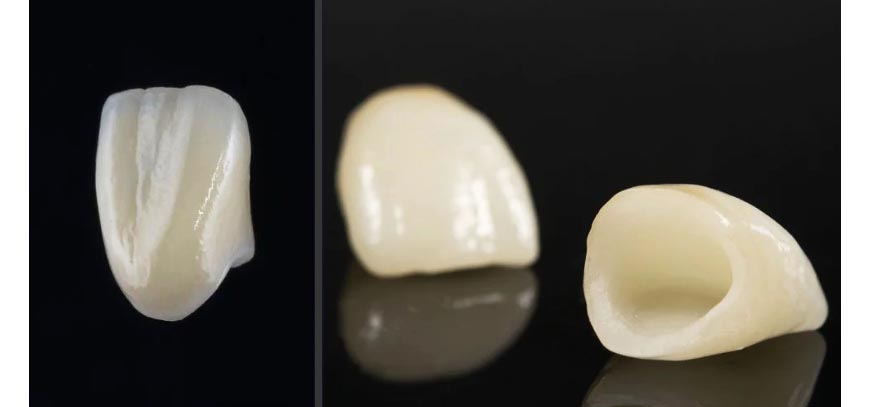
A rim, depending on its construction material, can be:
- Ceramics
- All ceramic
- Zirconium
Zircon crowns have been established as the solution with the best aesthetic result. Their main advantage, in relation to metal ones, is that they do not differ in appearance from natural teeth.
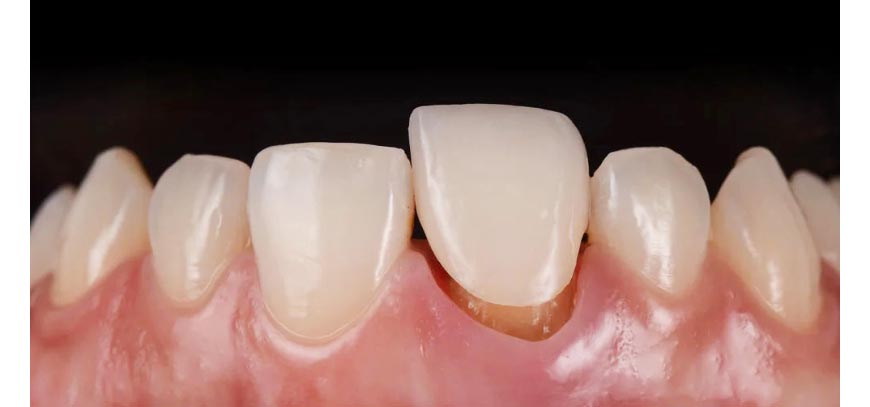
Cases we recommend crowns
- Broken Tooth
- Tooth at risk of breaking
- Denervated tooth with large occlusion (sealing)
- Aesthetic restoration
Results and advantages
- Greatly improve the smile
- Protects teeth and gums from further damage
- Minor to zero dye absorption
- Look and act like normal teeth
Dental Bridges
Dental bridges are a form of prosthetic restoration used to replace one or more missing teeth.
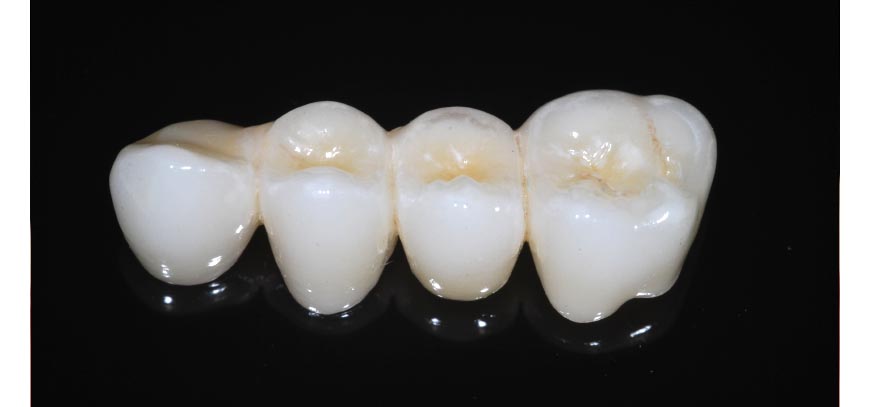
Why we recommend bridges
Losing a tooth starts a chain reaction that can significantly affect the mouth. A missing tooth creates a gap by causing neighboring teeth to move. Also, the tooth on the opposite side will have no “competitor” to hold resistance and maintain proper chewing ability. Thus, it will begin to move towards empty space. All these reactions can cause the loss of some teeth. By placing a bridge and filling the gap, the function of the mouth is restored.
The bridge usually covers two teeth, one tooth in front and one tooth behind the missing one. These are used as supports for its placement.
A bridge, depending on its construction material, can usually be:
- Ceramics
- Zirconium
- All ceramic
Each material has different applications and advantages, depending on the needs of the patient. A bridge can cover the missing tooth with an excellent aesthetic result.
Placement Process
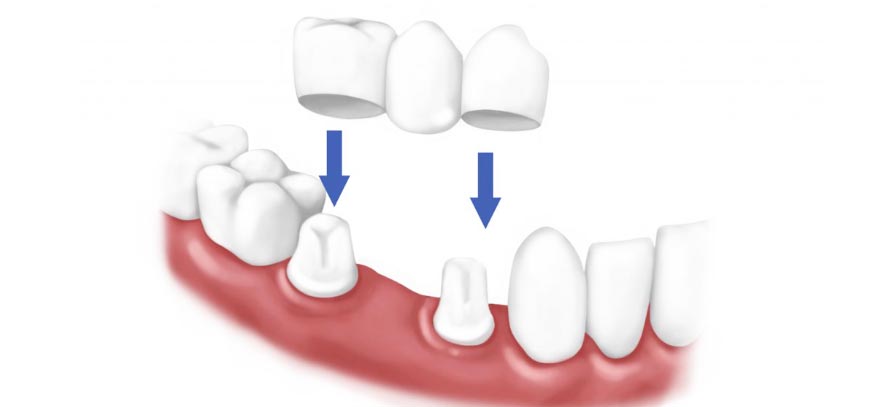
At the first appointment, the area where the work will be done is anesthetized. Any carious parts are removed, the missing wall is reconstructed and the teeth are prepared.
Imprint
Before the end of the first visit, the temporary bridge is placed on the prepared teeth.
At the second appointment, the temporary bridge is removed, the permanent bridge is placed and tested, and if the application, as well as the aesthetic result, are completely satisfactory, then the bridge is permanently bonded.
Grooming
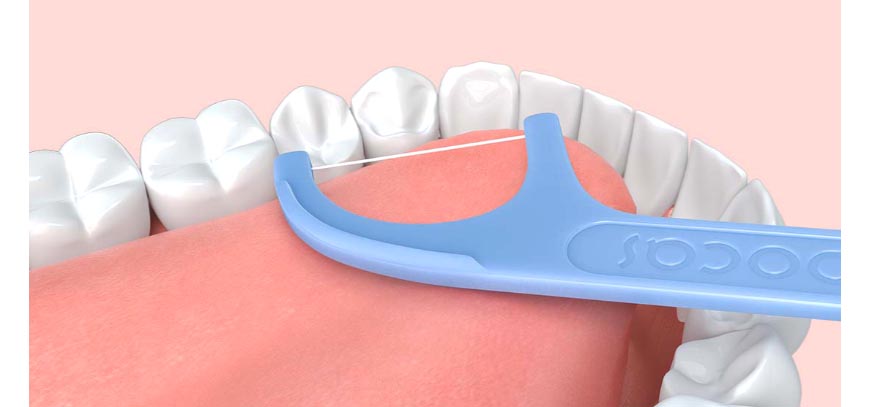
The success and longevity of the bridge depends on how healthy the teeth and tissues (gums) around it are. Therefore, care and cleaning are very important. Superfloss dental floss or special brushes are used to clean the bridge.
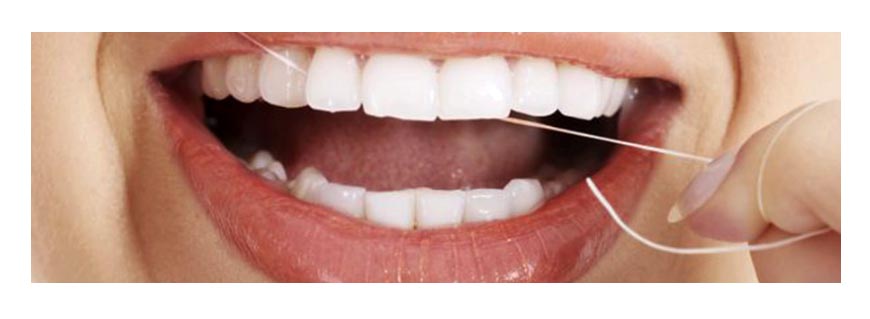
Superfloss is a bit different from dental floss in that it comes in chunks, the two ends of which are fine and hard while the middle part is fluffy, so it removes plaque effectively. Passing a Superfloss from the hard ends under the bridge, with the fluffy part we clean the places where the dental floss cannot pass.
Dental microprosthetics
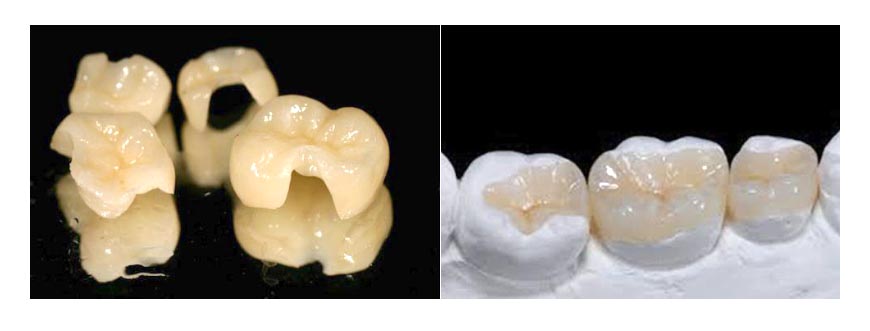
Insets
Porcelain inlays are a conservative method of restoring a damaged tooth, which would otherwise need full coverage with a crown. Inlays are placed when the tooth can no longer be restored with a filling (filling), due to the extensive wear and tear it has suffered. To understand exactly what a porcelain inlay is, we need to think of it as a filling that, instead of being made in our mouth by the dentist, is made in the lab by dental technicians and the dentist glues it to the tooth. Inlays are indirect aesthetic restorations that have excellent aesthetics, high resistance and durability.
When are inserts used
- In endodontically treated teeth
- In cases of extensive caries and large metal fillings
Results and advantages
- Excellent biocompatibility with the body
- Perfect tooth fit
- Tooth restoration achieved with zero wear
- High aesthetics
- High Durability
Porcelain veneers
Coverings made of special ceramic materials that are chemically bonded to the frontal surfaces of the front teeth. Porcelain veneers are thin shells, 0.5 mm thick, made of ceramic material (porcelain).
Removable dentures (Removable dentures)
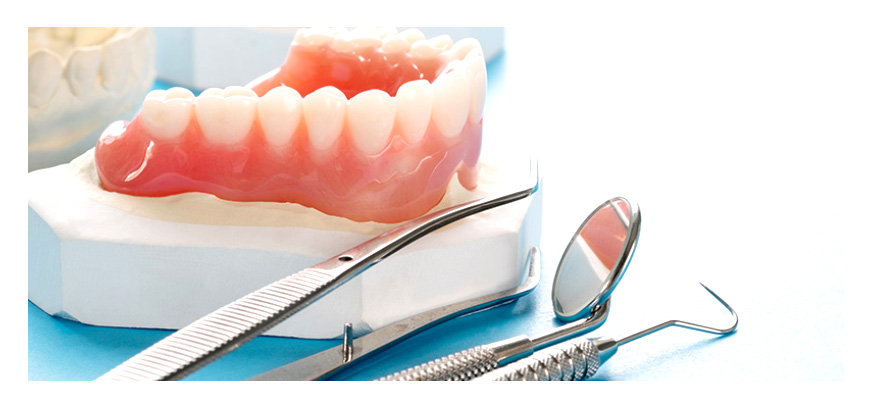
Maxillary or mandibular complete dentures with acrylic or metal base
Full dentures are essentially false plastic or porcelain teeth, on an acrylic frame-base or with a metal base. The acrylic base plays the role of the gums and the false teeth, acrylic or porcelain, complete the set.
Complete dentures are used in dentistry when there are no teeth in the patient’s mouth.
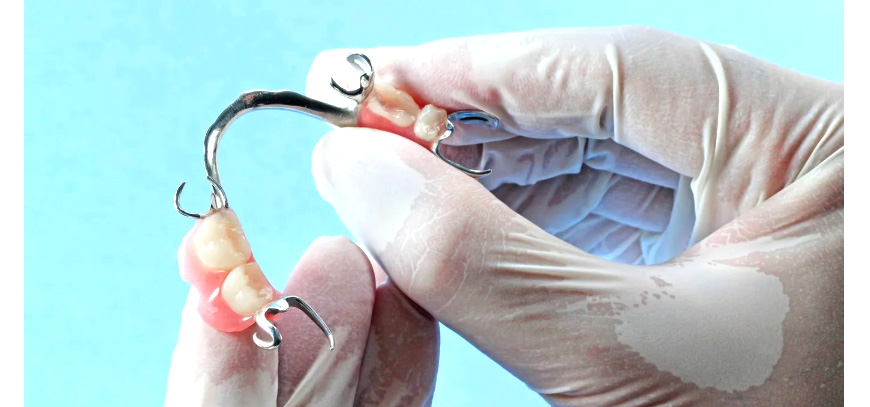
Maxillary or mandibular partial denture with acrylic or metal base
A partial denture or appliance is the removable structure that replaces missing teeth. It is based on natural teeth left in the mouth, on roots or on implants.
Maximum or mandibular direct denture
The immediate denture (total or partial) of the upper or lower jaw, is made before the extraction of the natural teeth (when present) and placed immediately after their extraction. The great advantage of this method is that the patient is not left without teeth at all.
Denture reapplication
Denture refitting is the process of repositioning / adjusting artificial dentures, the structure and position of which may have changed over time.
Denture repair
Repair is required when the denture has been damaged over time.
Hours
- Mon-Sat: 10:00am-2:00pm
Tue-Thu: 17:00pm-20:30pm
Contact
-
(+30) 698 798 53 75
