
Hours
- Mon-Sat: 10:00am-2:00pm
Tue-Thu: 17:00pm-20:30pm
Contact
-
(+30) 698 798 53 75
Contact Form
Pediatric dentistry
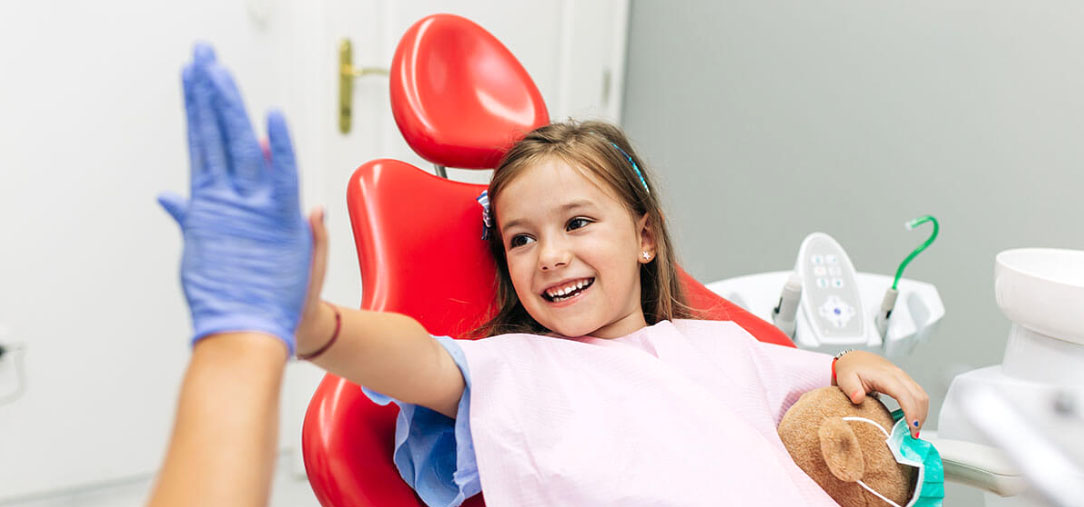
Pedodontics is the branch of dentistry that deals with the prevention and treatment of dental problems in our young patients, children and teenagers.
Pediatric dentistry treats young patients as a separate group that have their own characteristics and peculiarities. This field does not see children as miniatures of adults but as separate entities. By their nature, children perceive the same things and events in their own special way, let alone the dental office space and the dentist himself, which is something completely foreign and different in their eyes.
The purpose of pediatric dentistry is the smooth introduction of children to the dental office so that from a very young age they are familiar with the idea of the dentist and are not afraid of him. The child’s fear of the dentist’s office is largely related to both the fear of the unknown and the austere image that most offices have. It is of particular importance that the area of the dentist’s office that a child will visit for the first time should be properly designed, pleasant, warm and friendly.
A child adapts much more easily to a children’s dental office that is appropriately and appropriately decorated for children with colors, music and toys than to a common adult dental office that has nothing child-friendly. The space therefore plays a very important role in the child’s first reaction and visit to the pediatric dentist as it is the first impression, which always plays its role in a child’s psychology. It is reasonable for a small patient to enter a clinic for adults that has the classic “smell” of dental materials and no stimulus for children to cause not only fear but disgust and the child’s desire to run away from the area.
It is important to put yourself in the shoes of the children to understand what a child expects, what pleases and relaxes him and to offer it in the best possible way close to his expectations.
The prevailing opinion in the past was that the child will visit the dentists only if one of his teeth is damaged or broken. In recent years, modern pediatric dentistry has been trying to change the way of thinking and dealing with children’s dental problems. More importance should be given to the prevention of dental diseases that are likely to affect children’s teeth and the 2 main ones are caries and gingivitis, with caries being more common.
The best treatment is prevention, because on the one hand the child is not in pain and on the other hand he is slowly entering the dental office area as part of a game.
What is the role of the pediatric dentist?
The role of the pediatric dentist is to familiarize the child with the environment of the dental office from an early age. His goal is to change the image that young patients have of dentistry from a painful and stressful procedure to a pleasant experience. The phobias the child had about the dentist are reduced and the child is gradually introduced to and familiar with the dental office. This ensures healthy, fear-free future adults.
There are not a few cases where a child’s first unpleasant visit to the dentist has been recorded as a traumatic experience in his mind, something that follows him throughout his life.
What does a pediatric dentist do?
The pediatric dentist uses psychological techniques to approach the child. Then, with special vocabulary, he describes the tools and the procedure of dental treatment. In this way, the treatment turns into a game and the whole process becomes pleasant and accepted by our little patient.
Once pediatric dentists secure the child’s trust and cooperation, they proceed with the prevention and treatment of dental problems, which in children are usually the following:
- Erosion / tooth filling
- Tooth Fluoride
- Cover holes and cracks
- Pulpotomy / tooth denervation
- Extraction of baby / baby teeth
- Tooth Injury
- Prevention and early diagnosis of any orthodontic problems
- Tackling habits (pacifier use, finger sucking)
- Maintaining space for baby/baby teeth until permanent teeth erupt
- Training the child in proper oral hygiene
Hours
- Mon-Sat: 10:00am-2:00pm
Tue-Thu: 17:00pm-20:30pm
Contact
-
(+30) 698 798 53 75
